As Karnataka's Beyond Bengaluru drive gathers pace, the Karnataka Digital Economy Mission (KDEM) has put a number on its ambition for Mysuru: a $10 billion digital economy by 2030. The target, set out in the KDEM Vision Document's Mysuru Chapter, sits inside the state's wider $300 billion digital economy goal, and the city has since been designated both an ‘IT City’ and an ‘AI City’.
Targets like this are easy to discount. What makes this one worth reading carefully is not the headline figure but the composition underneath it, because Mysuru is pursuing something most Indian cities are not.
The target, by the numbers
| Measure | Figure |
|---|---|
| Digital economy target | $10 billion by 2030 |
| New digital jobs anticipated | ~1.5 lakh (150,000) |
| Startups to be supported | 2,500+ |
| Current annual IT exports | ~₹5,000 crore |
| Active startups today | 1,200+ |
| ESDM cluster land approved | 230+ acres |
| EMC 2.0 Letters of Intent | 7, ₹1,300+ crore proposed (~$160 million) |
| Karnataka-wide goal | $300 billion digital economy |
The idea behind “Make in Mysuru”
“Make in Mysuru” is not a formal government scheme, and it is worth being clear about that. It is a useful shorthand for something the official documents describe but rarely name: Mysuru is building an electronics manufacturing base and an IT services base at the same time, in the same city.
That is genuinely unusual. India's technology geography is mostly specialised. Bengaluru, Hyderabad and Pune are services and R&D cities. Manufacturing clusters sit elsewhere: Sriperumbudur, Noida, Pune's automotive belt. Companies that need both typically split their operations across two locations and absorb the coordination cost.
B.V. Naidu, Chairman of KDEM, has put the claim plainly: “Mysuru is the only place that has a flavour of Electronics and a flavour of Information Technology and no other city in India has such a set up.” Whether or not that holds as an absolute, the direction of travel is clear enough in what is actually being built.
The manufacturing layer
Mysuru is being developed as an ESDM (electronics system design and manufacturing) and cybersecurity cluster. The hard infrastructure behind that is further along than the headlines suggest:
- EMC 2.0 cluster: seven Letters of Intent under MeitY's scheme, proposed investment above ₹1,300 crore (about $160 million), and more than 230 acres of approved land.
- Lahari testing facility: an ISO 17025-accredited centre covering EMI/EMC testing, safety certification, environmental assessment and reliability validation, positioned as a single stop for product development and compliance. For a hardware company, local access to certification removes a real bottleneck.
- Shared semiconductor clean room: a multi-tenancy facility approved by the Government of India and Karnataka, aimed at lowering the capital barrier for compound semiconductor, OSAT and ATMP players.
- Committed projects: announcements have included a ₹1,250 crore PCB manufacturing plant by Vayu Assets, and an R&D Global Technology Centre from MiPhi Semiconductors, an Indo-Taiwan joint venture.
The services and deep-tech layer
Running alongside it is the services build-out. Plans presented under the Beyond Bengaluru banner have included a Global Technology Centre of around 10,000 seats and roughly 200,000 sq ft of tech-ready workspace in development, with the LEAP programme targeting large-scale job creation and Global Capability Centre commitments arriving from firms including Forward Air, Omni Logistics and McLaren Strategic Solutions.
KDEM CEO Sanjeev Kumar Gupta has described Mysuru's role in terms of a “spoke-shore” model, a satellite delivery location operating in concert with Bengaluru rather than competing with it. IT/BT Minister Priyank Kharge has framed the same point as Mysuru playing “a pivotal role in Karnataka's $300 billion digital economy target”.
The talent side has begun to corroborate this. A KDEM-Xpheno study found that 44,600 professionals are willing to relocate to Mysuru, against roughly 16,000 looking to leave, on a base of about 90,000 experienced professionals.
Why convergence changes the building requirement
This is where the “Make in Mysuru” framing stops being an abstraction and starts affecting real estate decisions. A city that hosts electronics design, semiconductor services, embedded engineering and R&D generates demand for a different kind of building than a pure back-office market does.
Conventional IT office stock is designed around people per square foot. Hardware-adjacent and research-led teams add requirements that a standard specification often cannot absorb:
- Higher connected power for test equipment, lab benches, server rooms and specialised cooling.
- Floor plates engineered for heavier loads: equipment, racks and lab installations rather than desks alone.
- Fit-out flexibility to accommodate labs, clean areas or test environments alongside conventional workspace.
- Redundancy that protects long-running test cycles and data-intensive workloads from interruption.
Retrofitting these into a building that was not planned for them is expensive and sometimes impossible. The practical consequence is that occupiers in this segment need to check structural and electrical specifications early, well before the commercial negotiation, not after it.
Where Renaissance Firstface fits
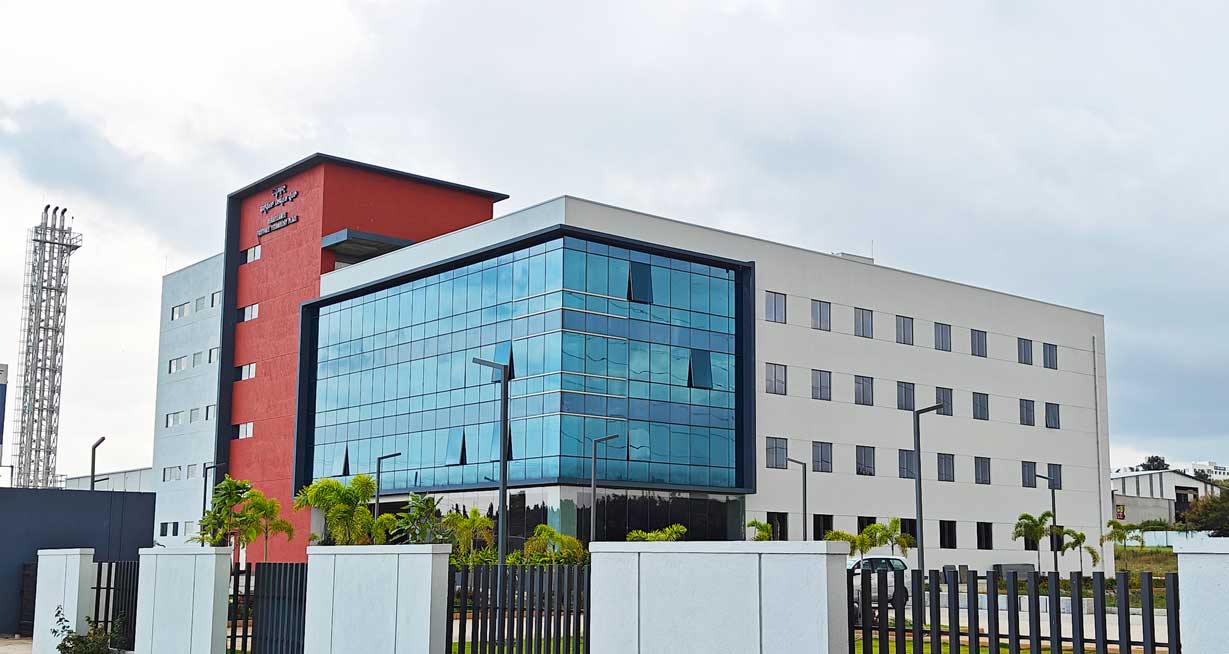
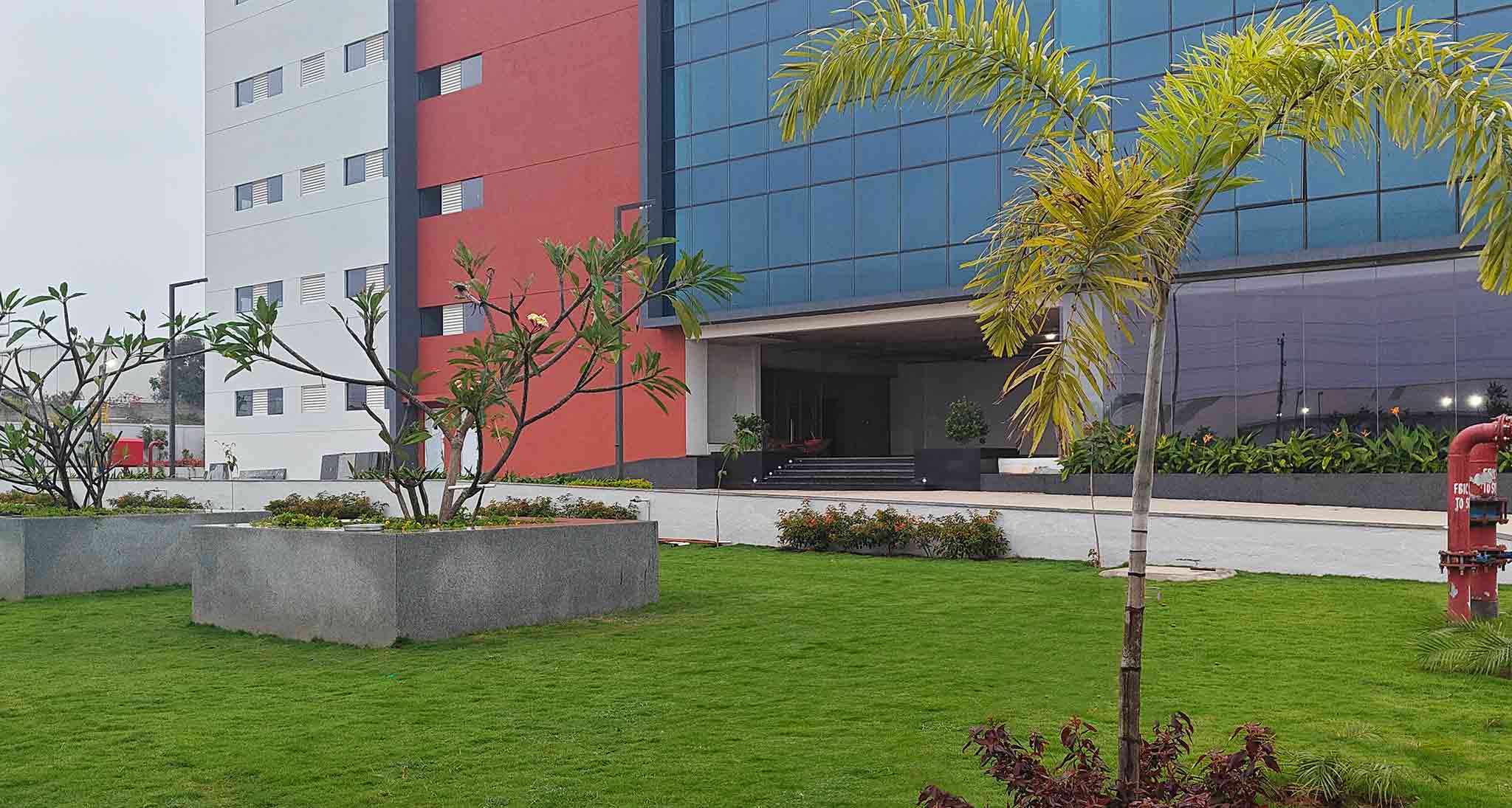
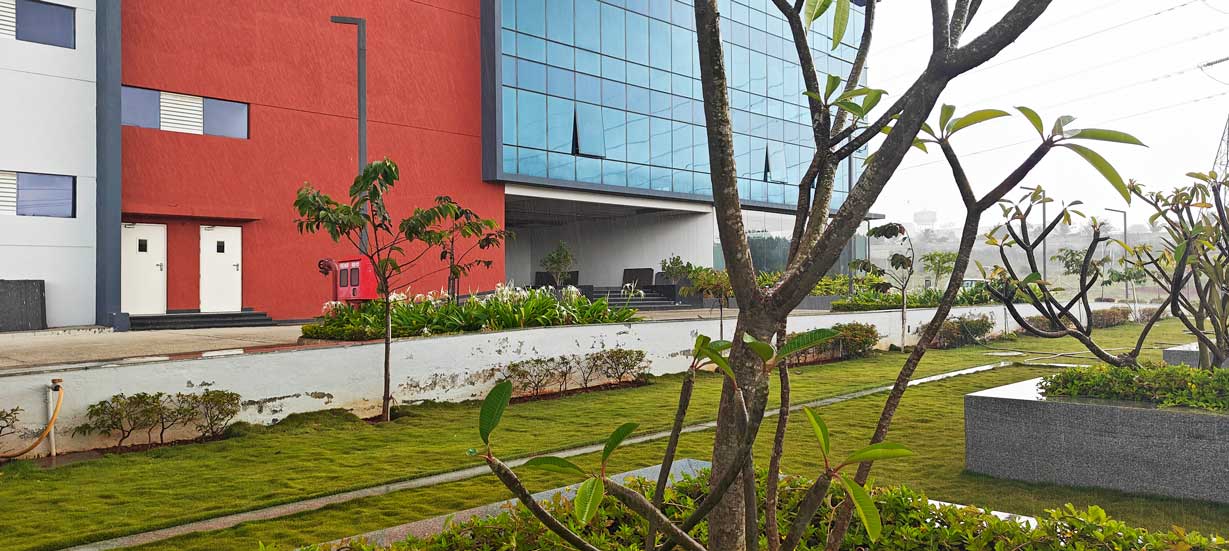
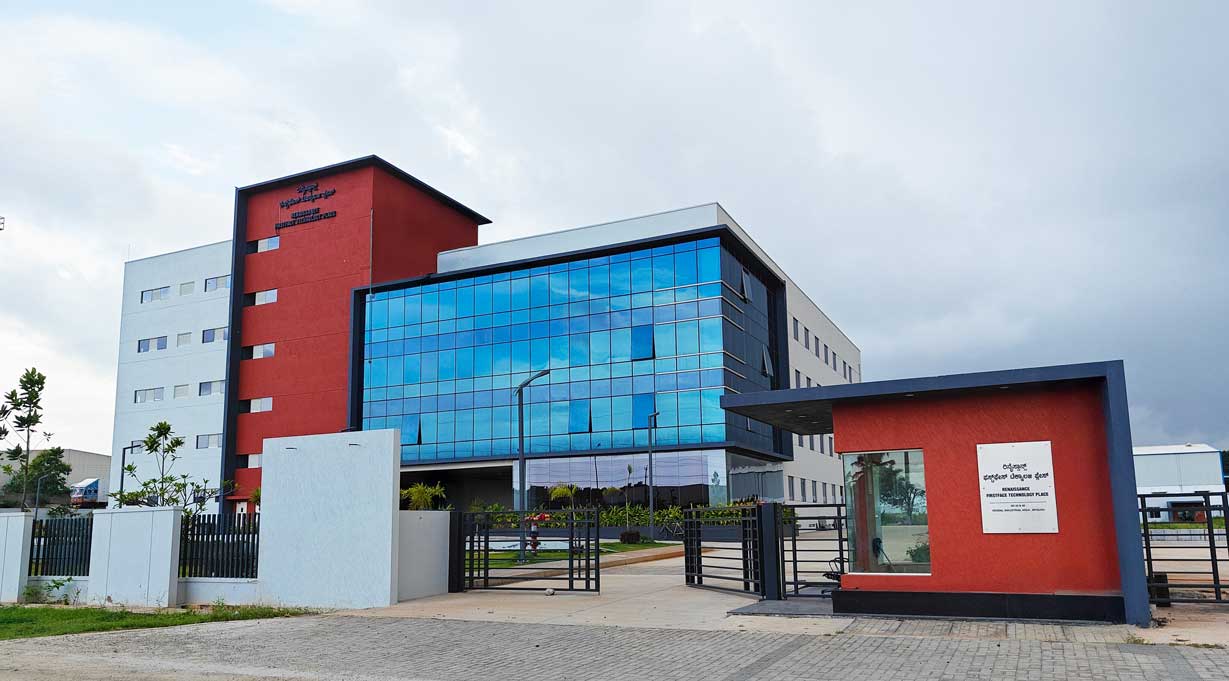
Renaissance Firstface Technology Place was planned against this profile rather than a generic office brief. Block A is ready for fit-outs with approximately 1.2 lakh sq ft of leasable IT space and typical floor plates of around 22,000 sq ft. Floors have been engineered to take additional load, including for data-centre requirements, and the campus has 1000 KVA of connected power with 100% DG backup. The wider development can scale to roughly 3 lakh sq ft.
For a company evaluating Mysuru on the strength of the ESDM and deep-tech build-out, those are the specifications that determine whether a plan is executable on schedule, and they are worth confirming against your own equipment and headcount plan rather than taking on trust.
A realistic reading
The gap between roughly ₹5,000 crore in current IT exports and a $10 billion digital economy is substantial, and targets of this kind are announced more often than they are met. Land approvals and Letters of Intent are also not the same as commissioned plants; some announced projects will slip, and some will not proceed at all. Karnataka's record of building ecosystems outside Bengaluru is still being written.
What has changed is that the supporting pieces are no longer only on paper. Certification infrastructure exists. Land is approved. Talent is measurably willing to move. For occupiers, the sensible posture is neither to price in the 2030 target nor to dismiss it, but to assess whether the specific building, power and fit-out conditions their operation needs are available in Mysuru today. Increasingly, they are.
Sources & note on terminology
Figures are drawn from the KDEM Vision Document (Mysuru Chapter) and announcements made at the Mysuru Big Tech Show under the Beyond Bengaluru initiative, as reported by The Hindu, with ESDM cluster details from the Karnataka Digital Economy Mission. “Make in Mysuru” is used here as an editorial description of the city's combined manufacturing and IT trajectory; it is not an official programme name. Investment and project figures reflect announcements and proposals, which may change. Readers should verify current status with KDEM or the relevant department before making commitments.